









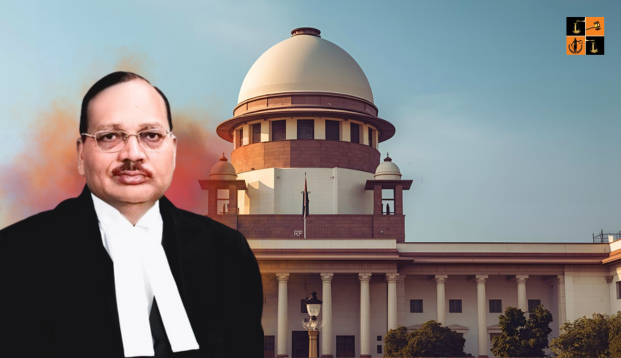
Chief Justice Surya Kant stunned a Supreme Court bench Monday when he disclosed that a woman known to him professionally had been wiped out financially by a digital arrest scam, a fast-spreading extortion racket in which criminals masquerade as law enforcement officials on video calls to coerce victims into transferring money. The revelation surfaced as the Court revisited its own suo motu proceedings on the crisis, underscoring the judiciary's deepening alarm over fraud that has already drained an estimated Rs.3,000 crore from Indian citizens.
The Supreme Court had initiated suo motu proceedings on digital arrest fraud last year, subsequently routing cases from multiple states to the CBI for investigation. Following that judicial intervention, the Ministry of Home Affairs assembled a high-level inter-departmental committee, which has since submitted a report outlining a proposed standard operating procedure to combat such crimes. Monday's hearing was triggered when Attorney General R. Venkataramani sought an adjournment, citing ongoing inter-departmental consultations, only to be met by the Chief Justice's candid disclosure that even professionally accomplished individuals are not immune, "She was crying, she lost all her savings,"
CJI Surya Kant said, describing the plight of the woman who surrendered her entire post-retirement corpus to the fraudsters. The Court had previously flagged the role of banks, directing attention toward mechanisms that could flag abnormally large or sudden outflows from customer accounts before transactions are completed.
The bench's evident frustration centred on a troubling paradox, that education and professional standing offer no reliable protection against psychological manipulation by fraudsters who weaponise the fear of law enforcement. Amicus curiae and Senior Advocate N.S. Nappinai sharpened the Court's focus by proposing a concrete technological remedy: a mandatory "kill-switch" embedded within intermediary platforms capable of halting suspect transactions in real time.
Nappinai observed that victims characteristically "freeze" when confronted by threatening impersonators, rendering voluntary self-protection practically impossible in the moment. The bench accepted the adjourned schedule, with the matter listed for further hearing on May 12, by which point the inter-departmental committee's SOP framework is expected to be placed on record.
Picture Source :



















